Improving Legal Access for Immigrant Founders
project
skills
tools
timeline
Class
1 month
User Interviews
Wireframing
Design Itrations
Testing
Conceptualizing
Figma
FigJam
Replit
Microsoft
Emotional & Psychological Safety
Early-stage immigrant founders delay seeking help not because of lack of need, but because fear, isolation, and pressure to appear “successful” make vulnerability feel risky
Resource Access
Founders lack clear pathways to funding, expertise, and support systems in an unfamiliar ecosystem
Legal Clarity & Trust
ELegal complexity becomes a recurring blocker when founders lack trusted guidance that explains what to do and how it aligns with their goals
Cultural & Social Navigation
Immigrant founders must actively learn unspoken U.S. startup norms- pitching, networking, credibility signaling- while simultaneously proving they belong
PROJECT OVERVIEW
Low-income immigrant founders face disproportionate legal friction while starting and scaling their businesses- often without the financial means or contextual knowledge to access reliable legal support. In partnership with the Nasdaq Entrepreneurial Center, our team worked closely with founders to identify core barriers and design a solution that provides free, trustworthy, and immediate legal access.
Outcome: A web platform connecting founders with vetted law students and lawyers offering pro-bono hours, enabling short legal sessions and real-time support.
My Role: Product Designer & Researcher
Methods: Iterative prototyping, User interviews, journey mapping, insight clustering, prototyping, usability testing, stakeholder collaboration
THE PROBLEM
The problem, as initially described by Nasdaq, is that Immigrant founders are often navigating:
Sample User Persona
Unfamiliar legal systems
Low trust in unfamiliar lawyers
Time-sensitive legal decisions with long-term consequences
High costs of legal services
USER GROUP
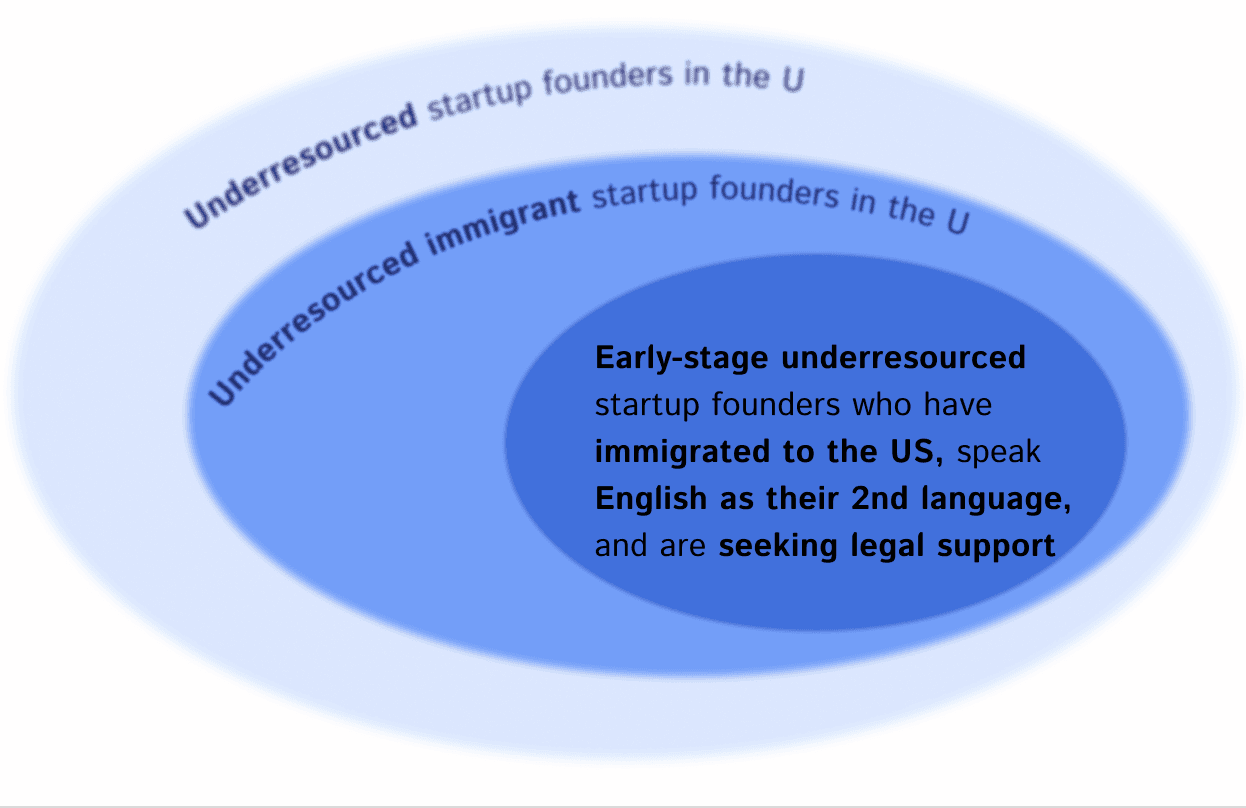
Rather than designing for “all founders,” we intentionally scoped our key user group to:
Low-income immigrant founders within the Nasdaq Entrepreneurial Center ecosystem
This allowed us to deeply understand a high-need, under-served population while staying aligned with the Center’s mission and operational realities.
USER RESEARCH
We conducted in-depth interviews with immigrant founders to understand:
Where legal issues first appear in the founder journey
How founders currently seek help
Why existing solutions fail them

Deji Baluga
Deji is an experienced founder building a tech company in the U.S. While confident in his skills, he often faces uncertainty navigating legal systems and trust barriers in a new ecosystem. He values clear guidance, credibility, and timely support as he builds in an unfamiliar environment.
Goals:
-To access trustworthy, affordable legal guidance early
-To establish credibility with investors and partners
Pain Points:
-Difficulty knowing which lawyers or legal services to trust
-Legal processes are expensive, opaque, and high-risk if done incorrectly
-Lacks immediate access to community or peers with similar immigrant experiences
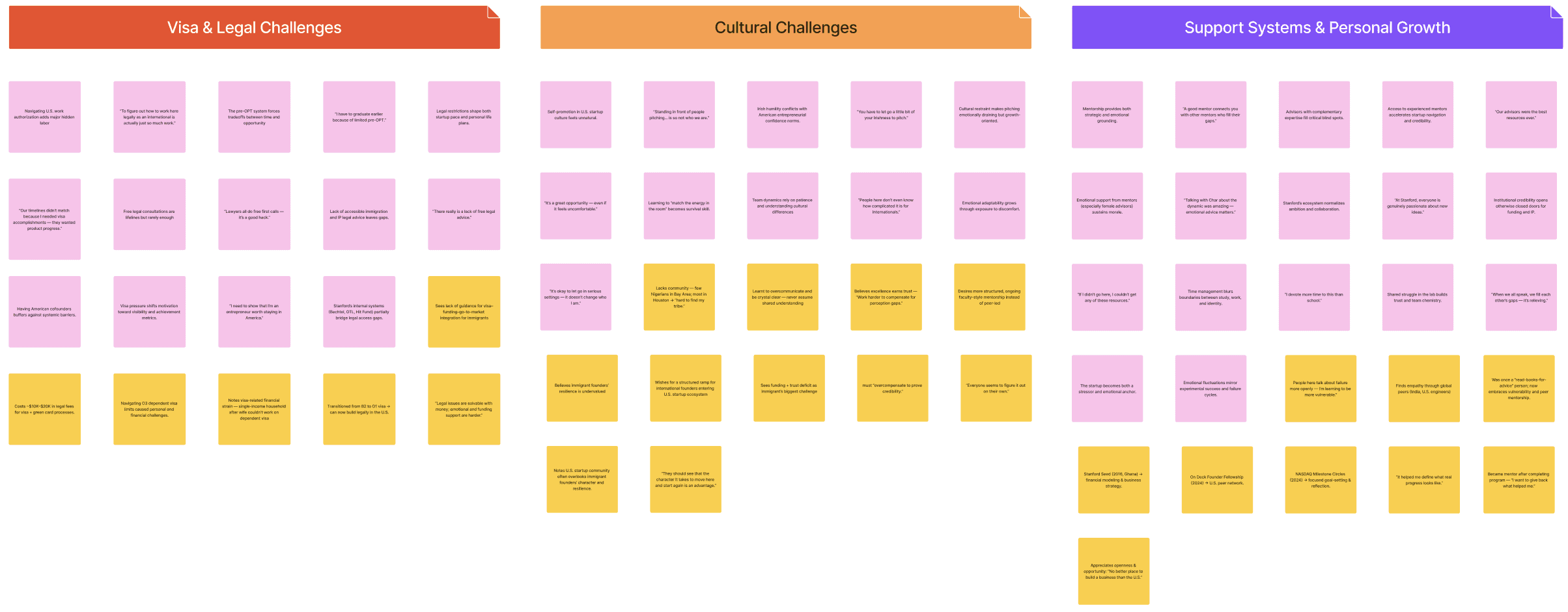
We clustered interview responses into pain point themes to better identify a trend and aid in analysis
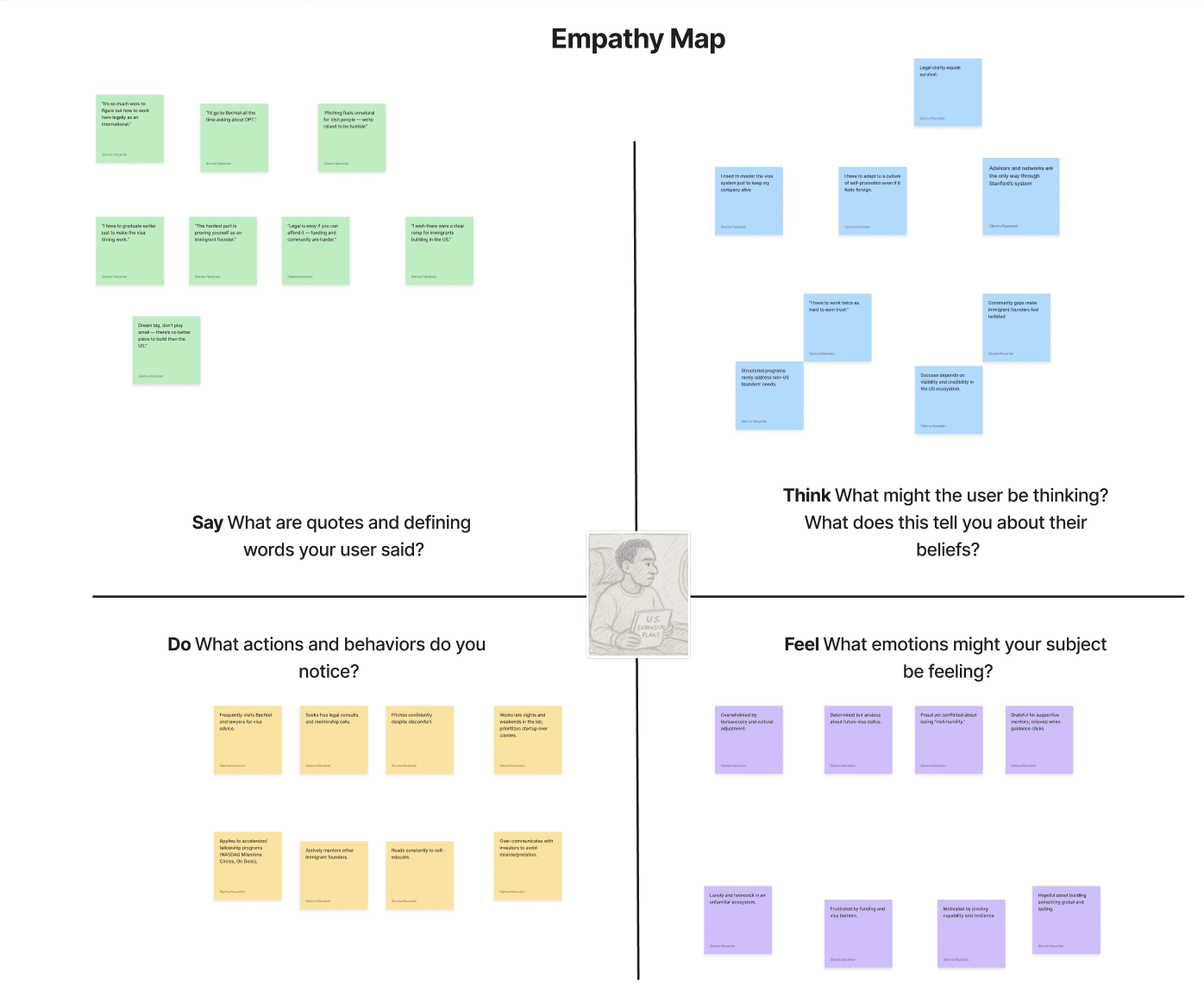
To further synthesize, we also created an in-depth empathy map to understand non-verbal sentiments
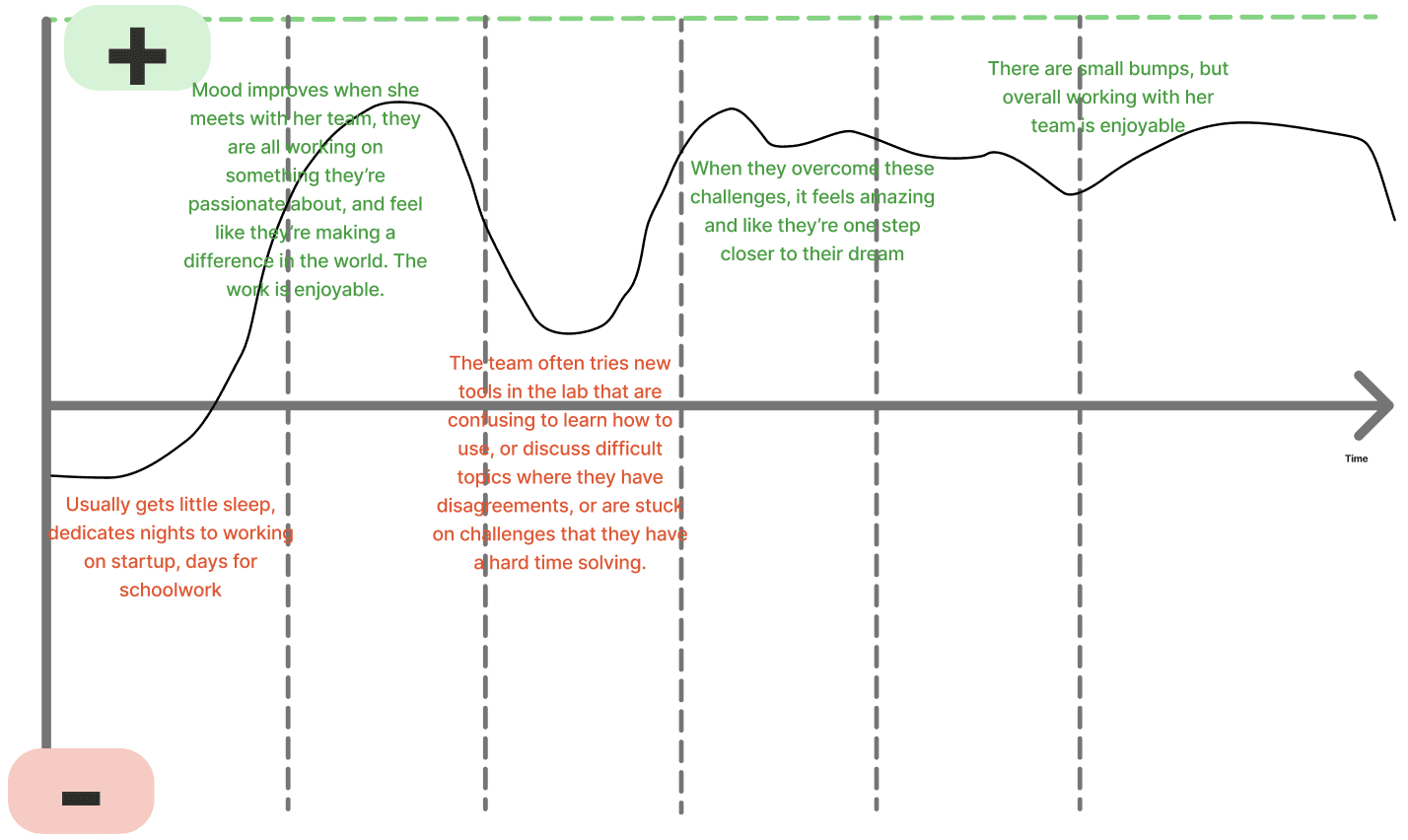
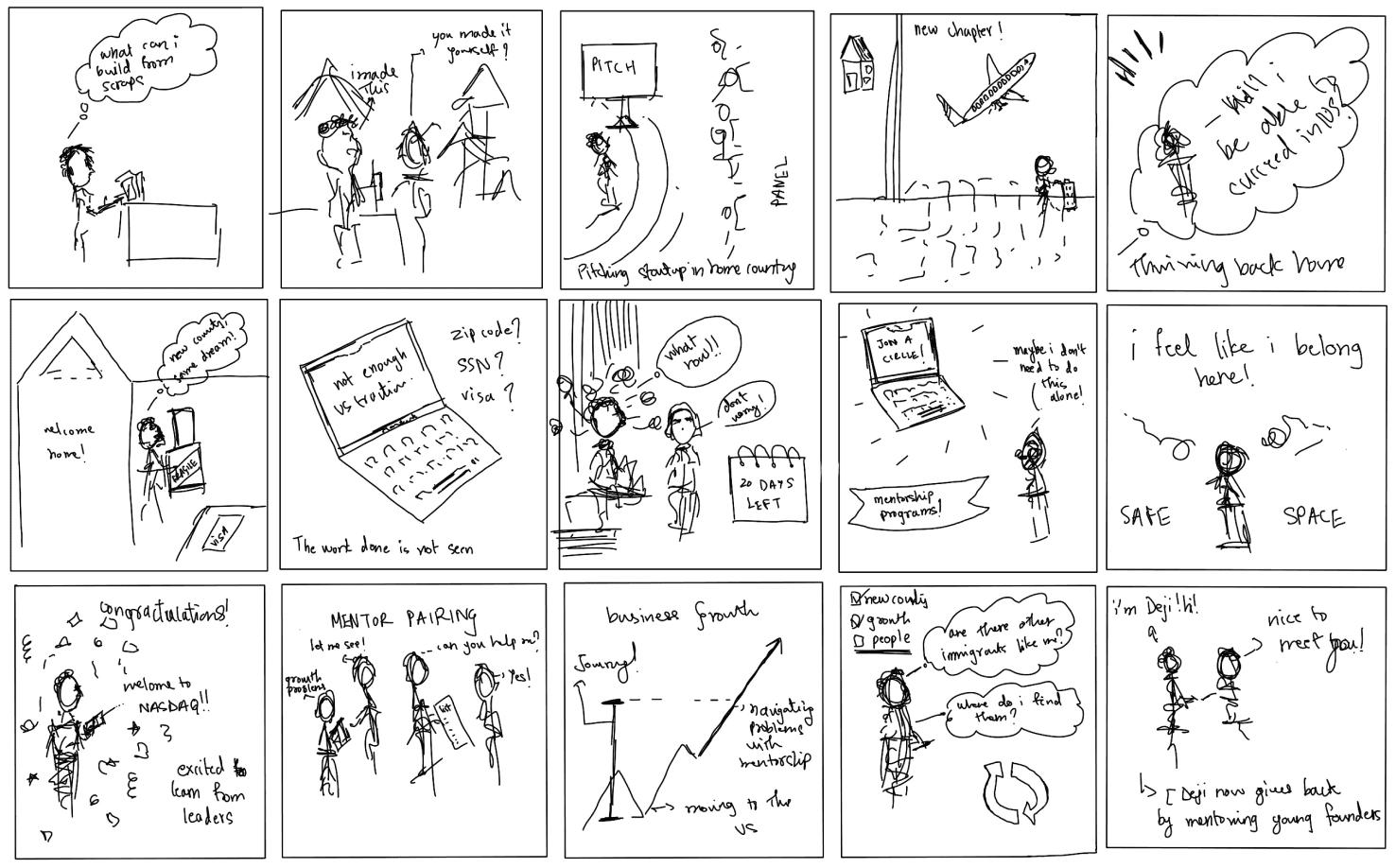
User Journey mapping was done to understand founders’ perspective within their zoomed-out timeline
NARROWING USER NEEDS
To deepen our understanding, we conducted follow-up interviews specifically focused on legal challenges, uncovering that founders struggled most with:
This reframed the problem from “lack of legal resources” to lack of trusted, timely, and accessible legal guidance
Understanding which type of legal help they needed
Accessing help quickly and affordably
Knowing who to trust
KEY INSIGHTS
Through interviews, journey mapping, and clustering across founders at different stages, we realized that legal help was a recurring structural blocker embedded throughout the founder journey
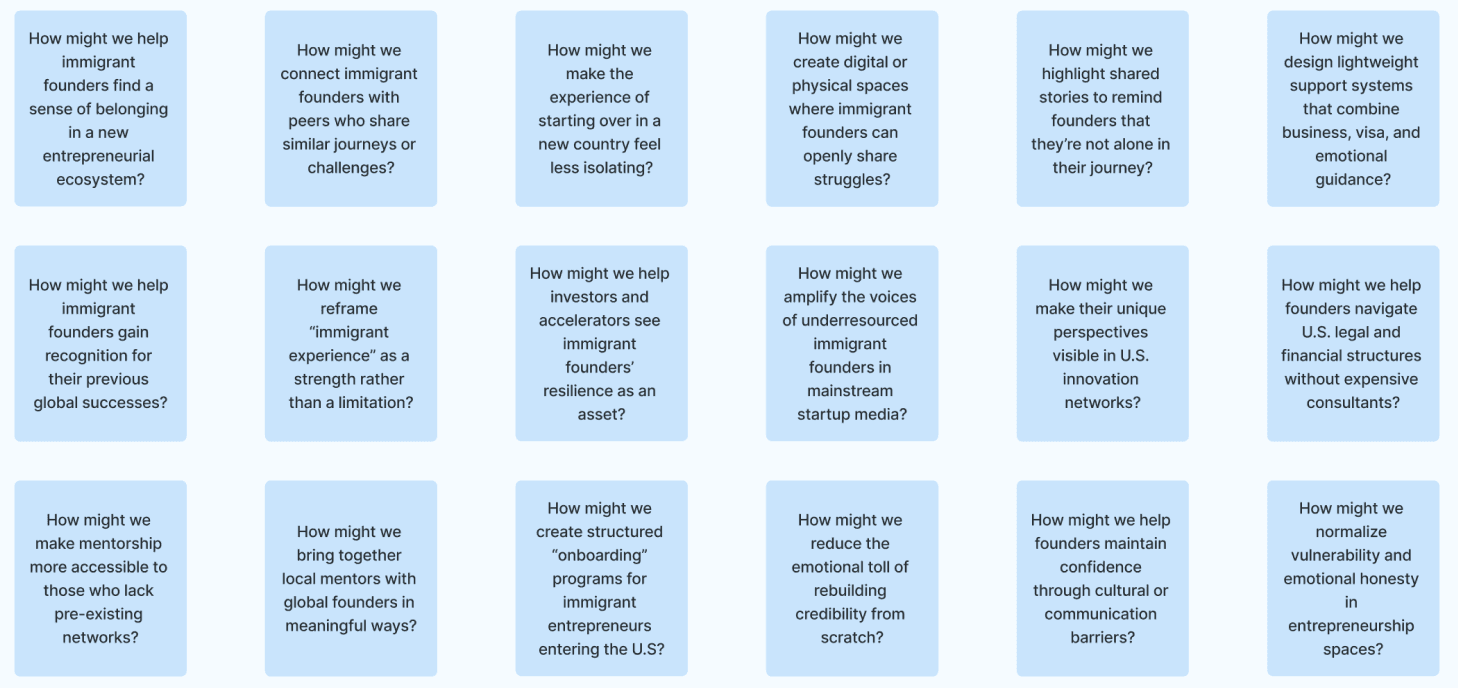
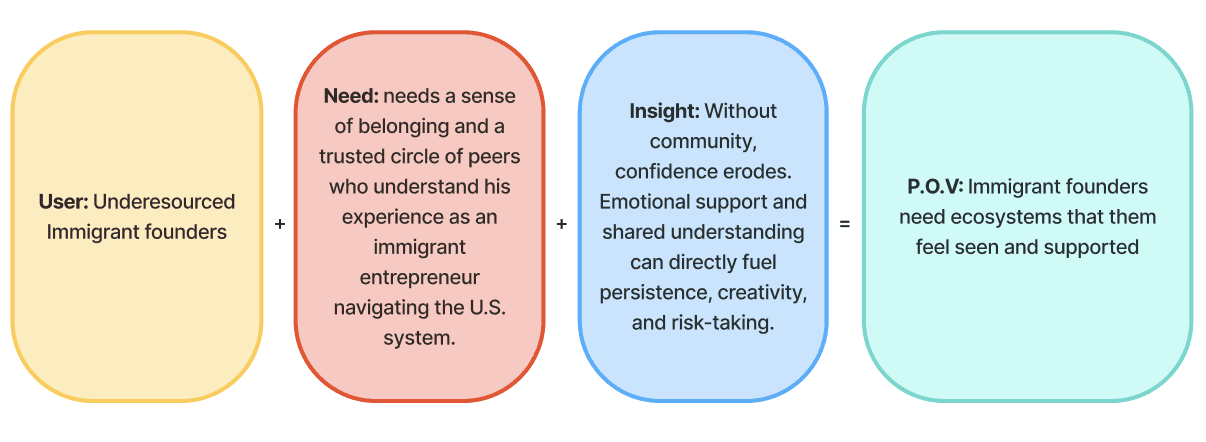
From our User Insights and Needs, we then crafted a concise P.O.V statement
These low-fidelity experiments helped us identify what signals of trust mattered most to founders.
Reframed Problem Statement: Low-income immigrant founders don’t lack trusted, timely, and low-friction access to legal guidance at the moment it matters most
Hence, How Might We:
Legal issues surface repeatedly, but too late
Legal challenges emerged at multiple points- incorporation, contracts, compliance, IP-but founders often sought help only after damage had already occurred.
While affordability mattered, founders emphasized trust as the larger hurdle. Many were unsure how to evaluate a lawyer’s credibility, relevance, or intent, especially in a system they weren’t raised in. Without clear signals of trust, founders preferred to delay action rather than risk making the wrong choice
Trust as a barrier
Most founders weren’t looking for long-term legal engagement. Instead, they wanted:
Short, focused guidance
Help understanding what kind of legal issue they were facing
Confidence to take the next step
Founders need immediate direction
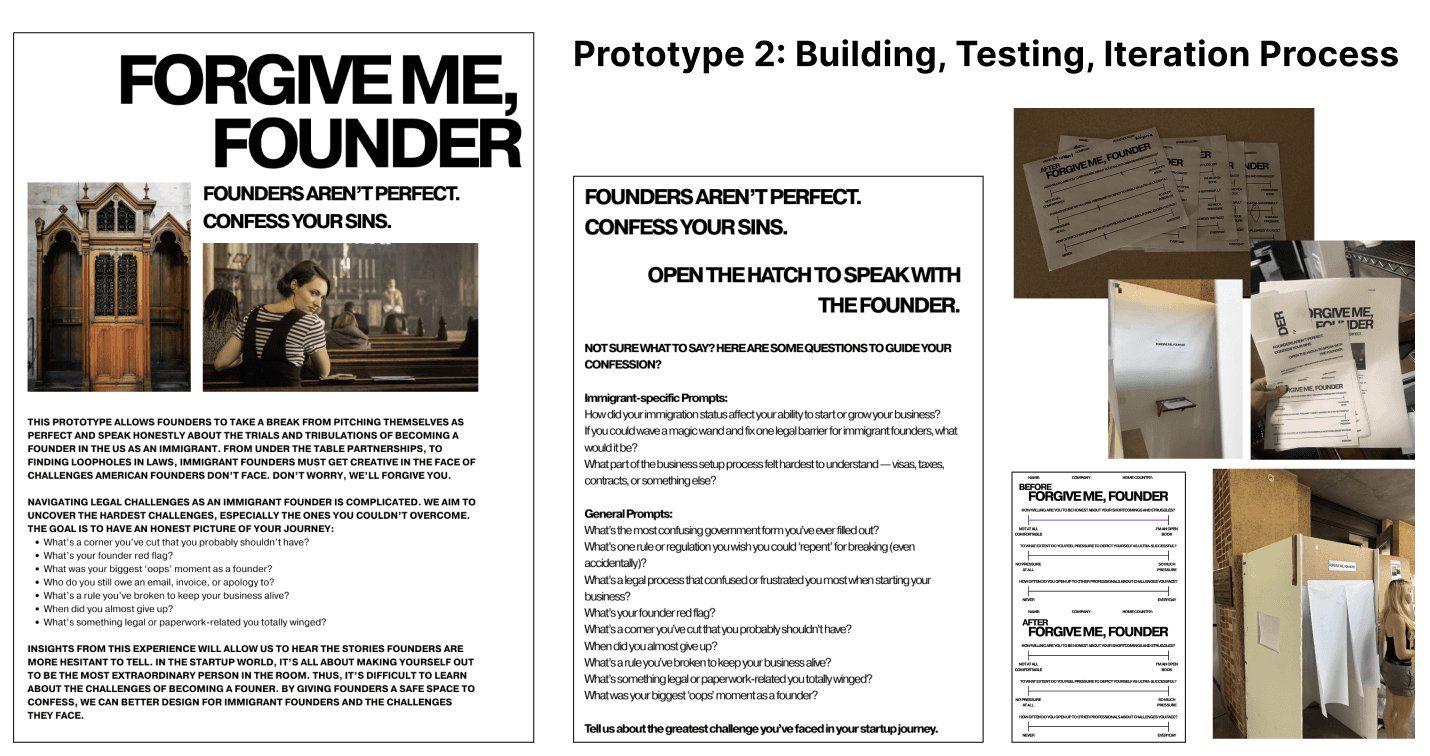
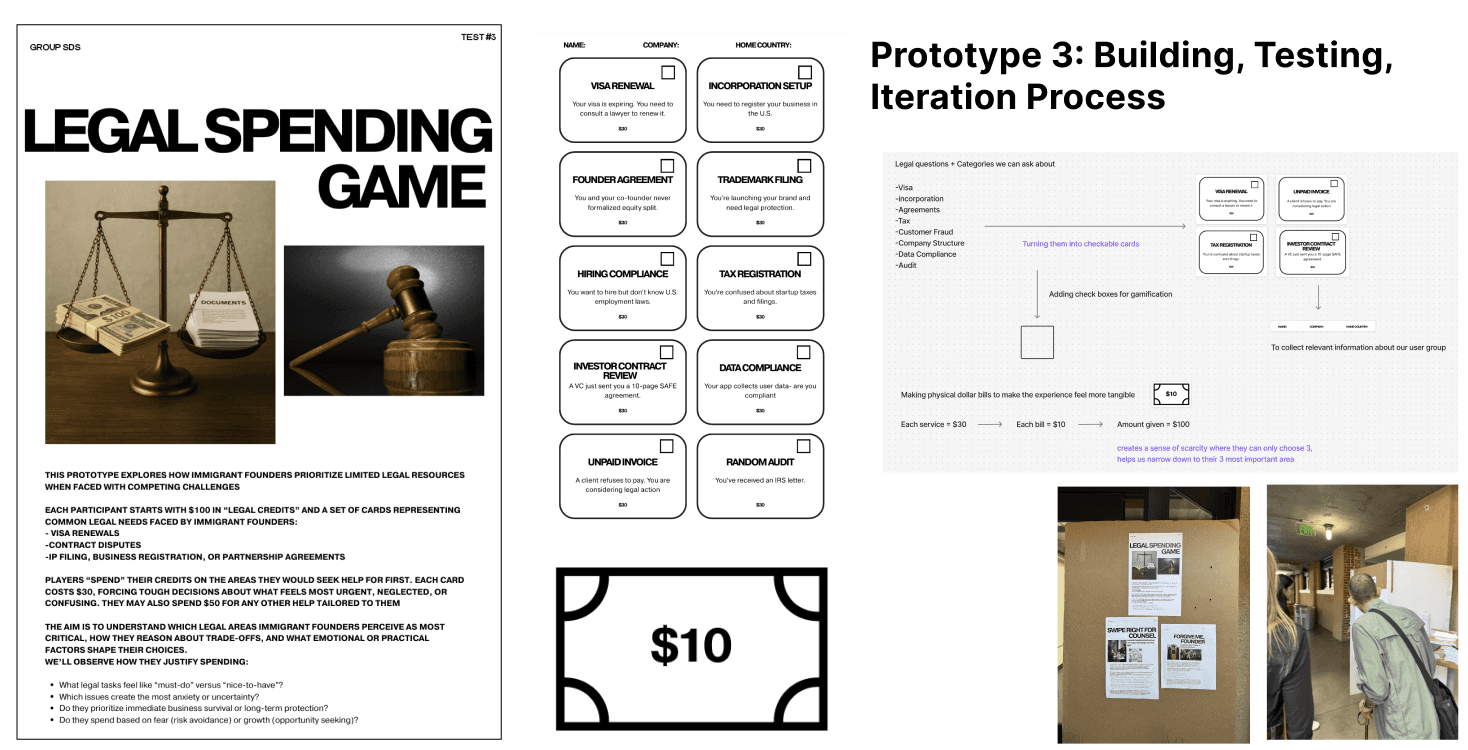
PROTOTYPING AND VALIDATION
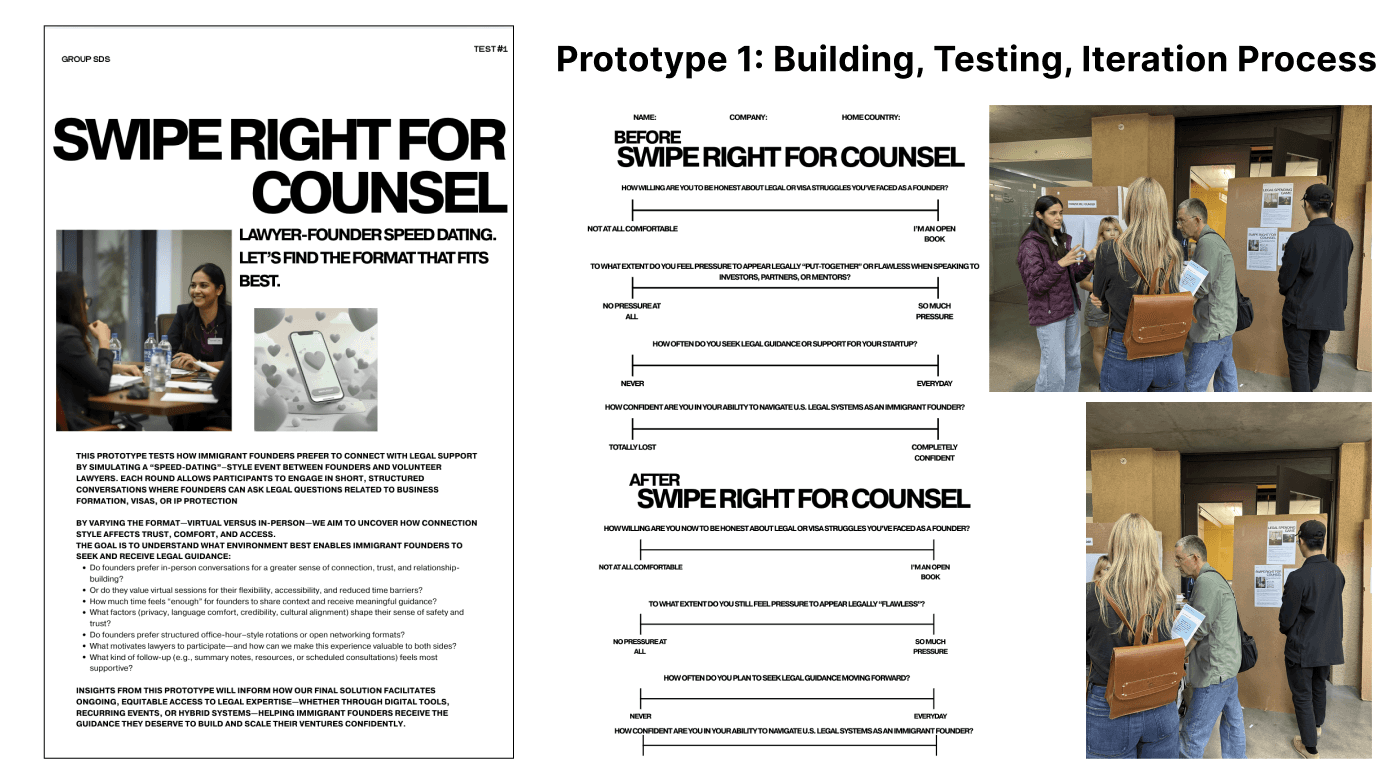
Before jumping into a digital solution, we designed three interactive, game-based prototypes for Prototype Day to:
-Test assumptions aroudn trust
-Observe how founders evaluate legal credibility
-Understand decision-making under uncertainty
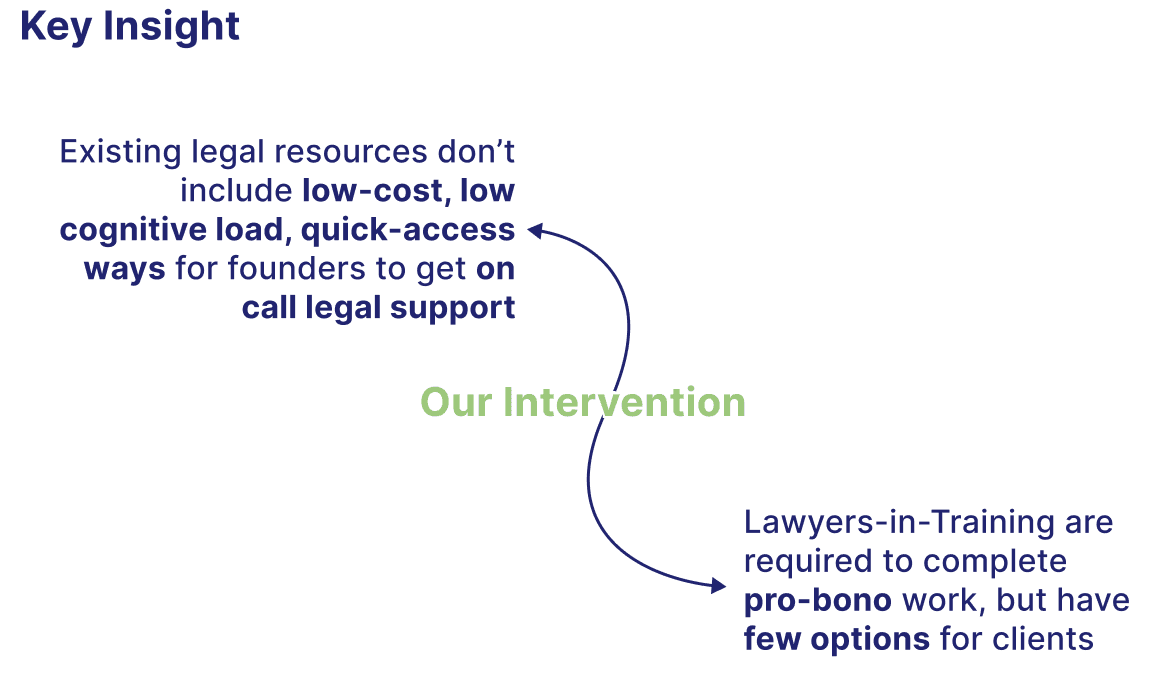
Finally, we analyzed why the existing legal system wasn’t working for them. The overarching reason was that incentives of lawyers and founders, even by way of their lifestyles, we’re severely misaligned
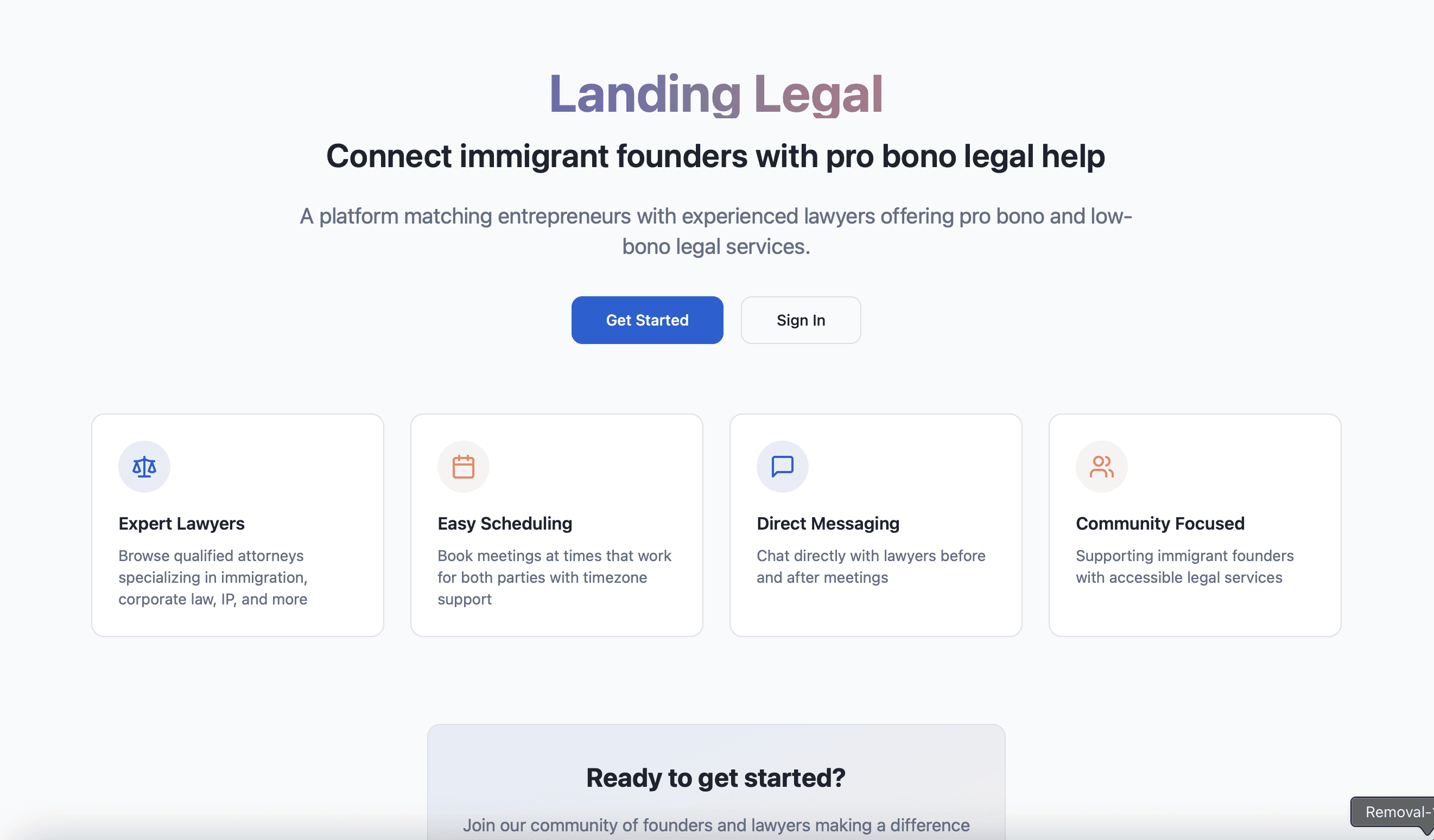
SOLUTION: LANDING LEGAL
Core Concept
A website that connects low-income immigrant founders with:
Law school students completing pro-bono hours
Practicing lawyers offering free, short consultations
All interactions are designed to reduce friction, increase trust, and respect founders’ time constraints.
Key Features
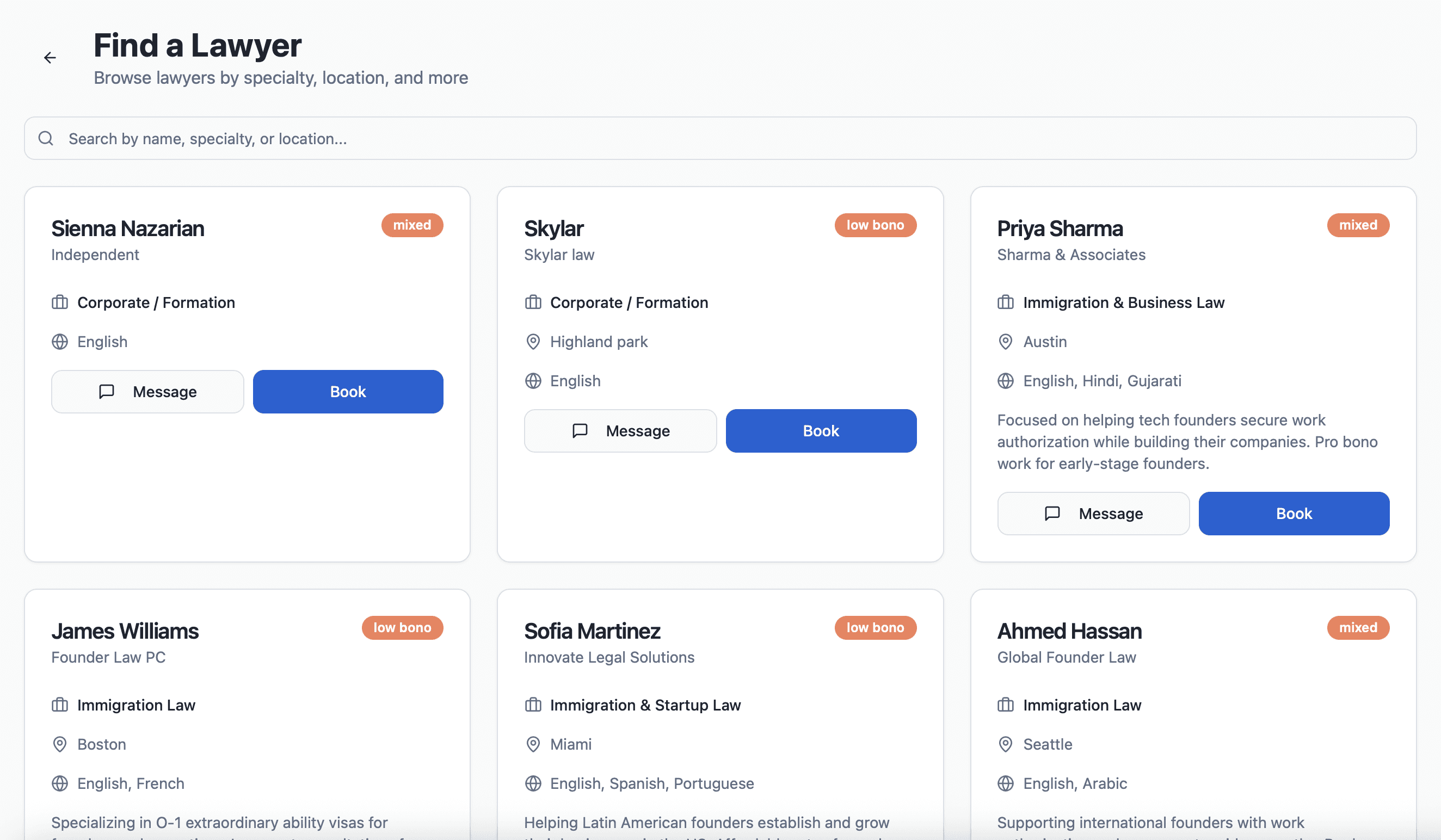
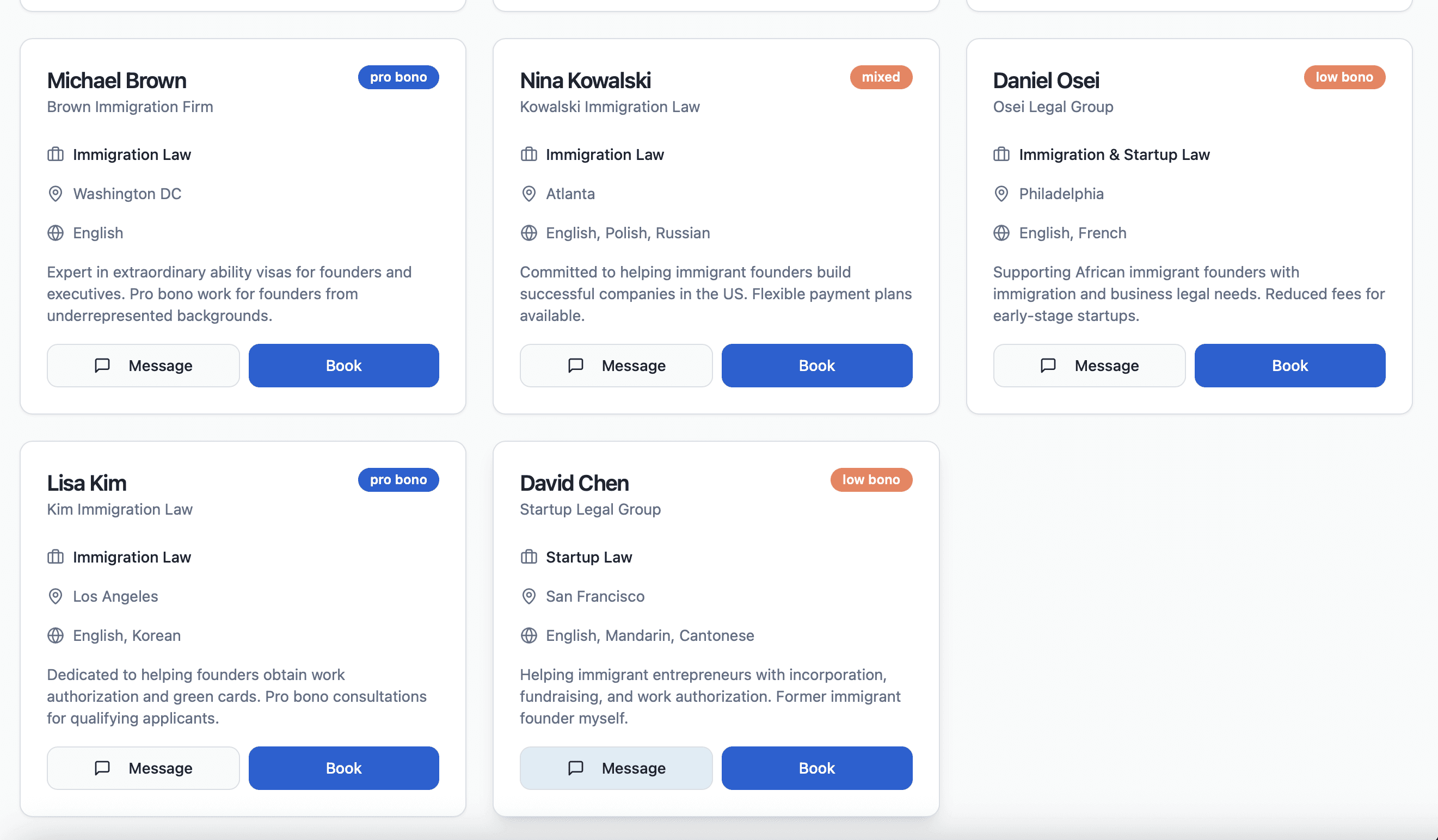
1. Trust-Based Lawyer Selection
Founders can browse legal support providers using filters derived directly from research, including:
Area of legal expertise
Experience with immigrant founders
Language and cultural familiarity
Clear credentials and background
This directly addresses founders’ hesitation around credibility and safety.
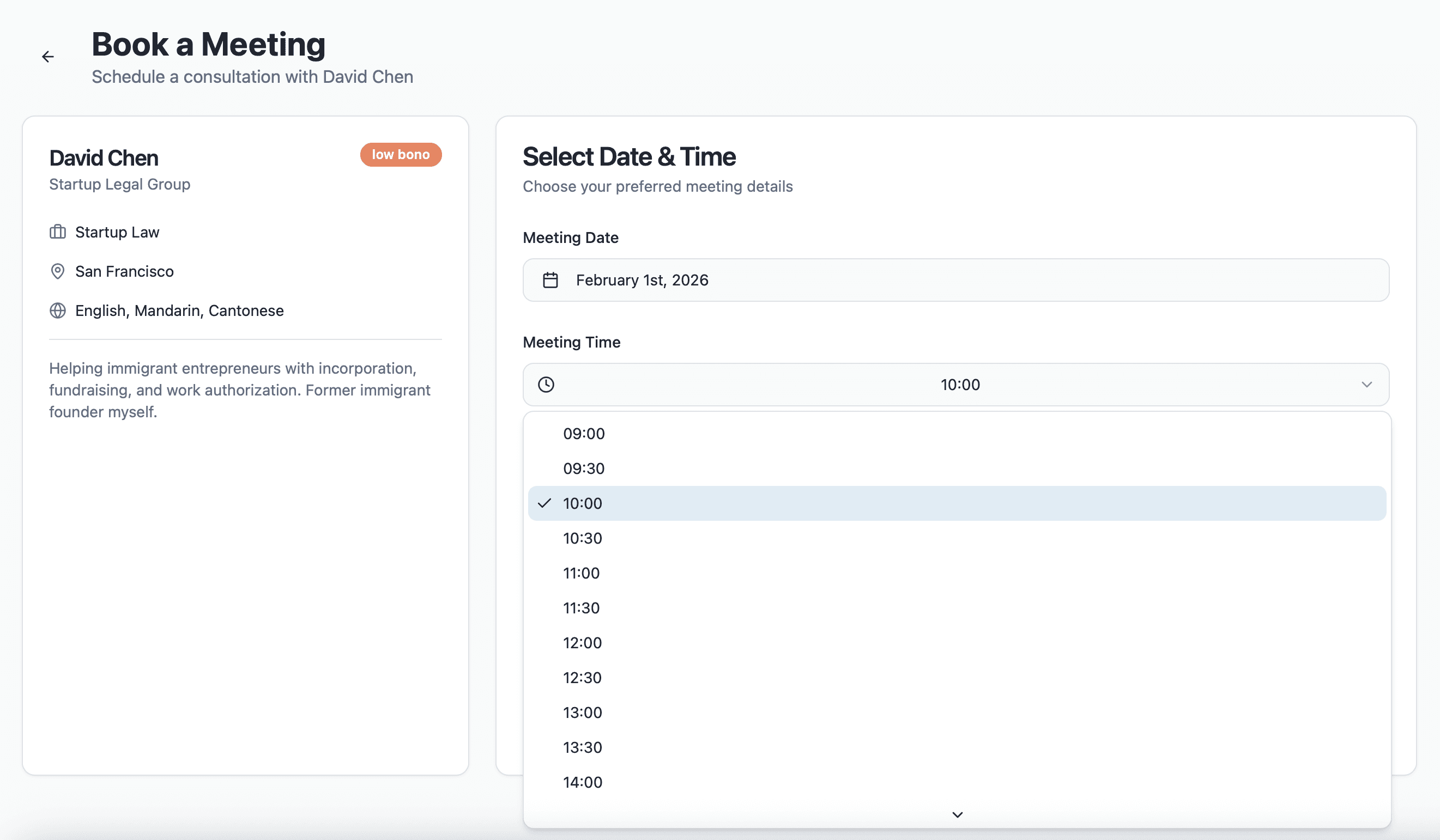
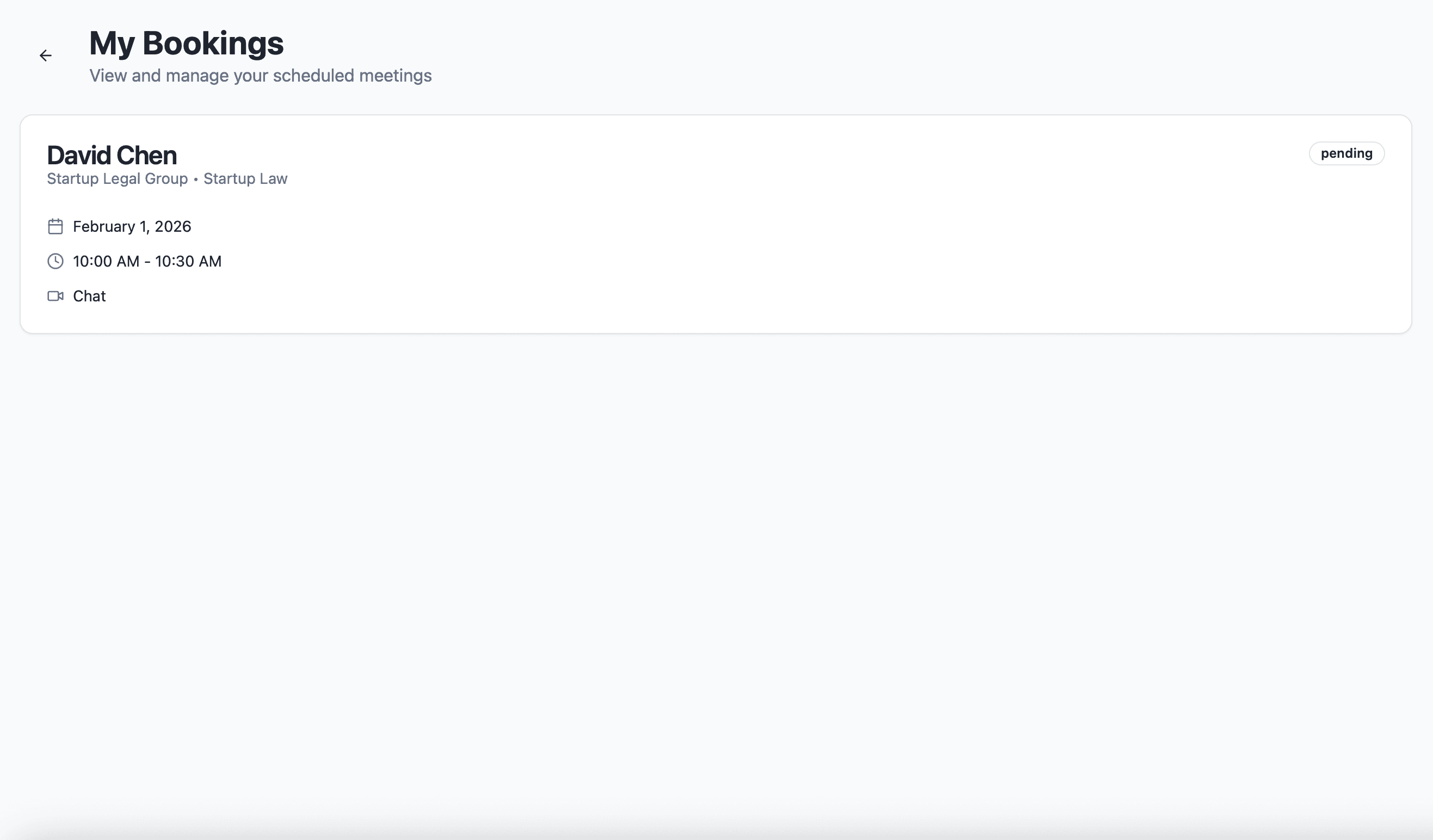
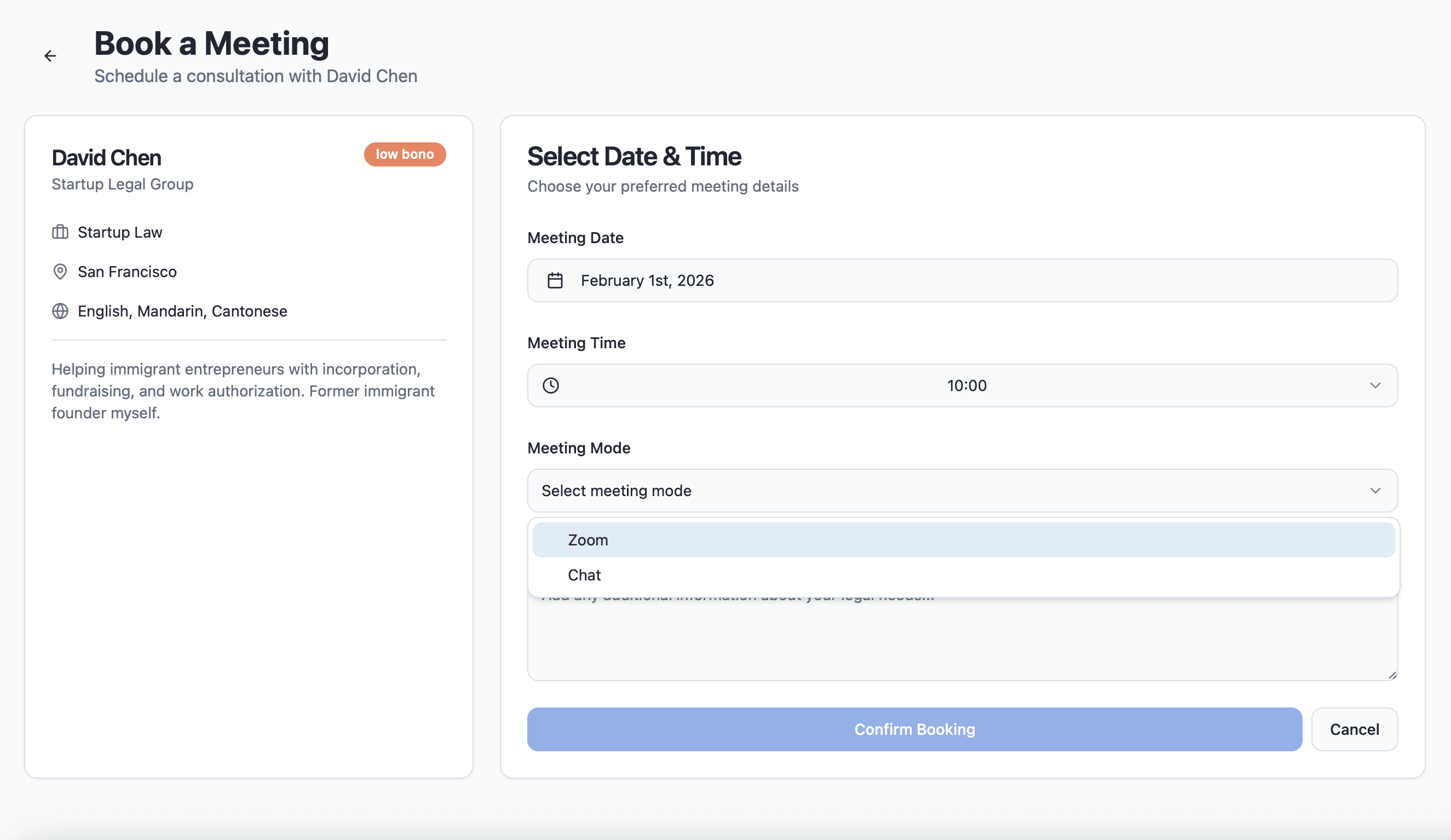
2. Free, Short Legal Sessions
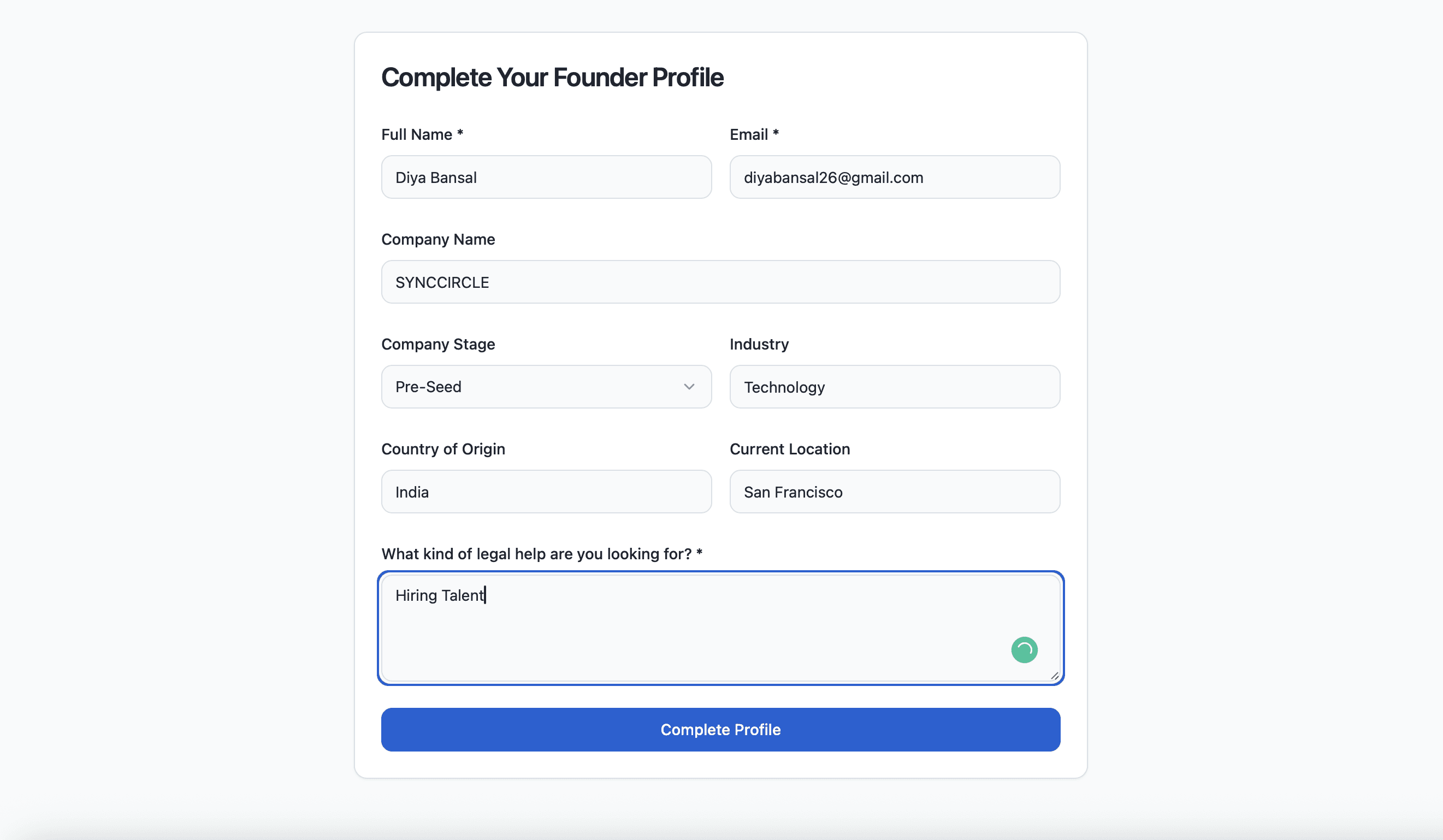
Founders can book short, focused session at no cost, lowering the barrier to asking questions early rather than waiting until problems escalate
They also have an option to choose beween a zoom call/chatting with the lawyer over text. This gives them more flexibility and creates a low-pressure environment.
Chats would aldo be available in their preferred language
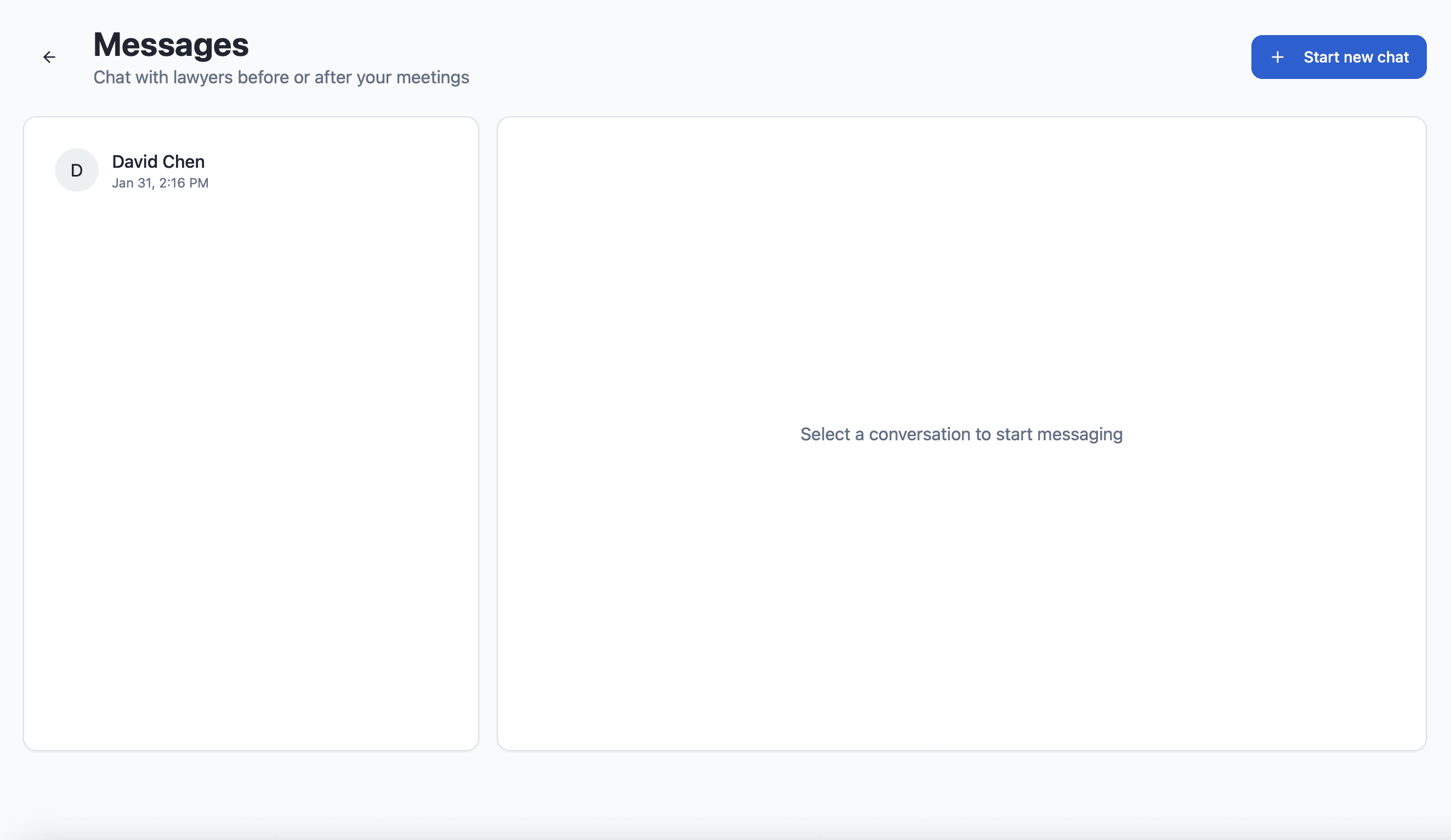
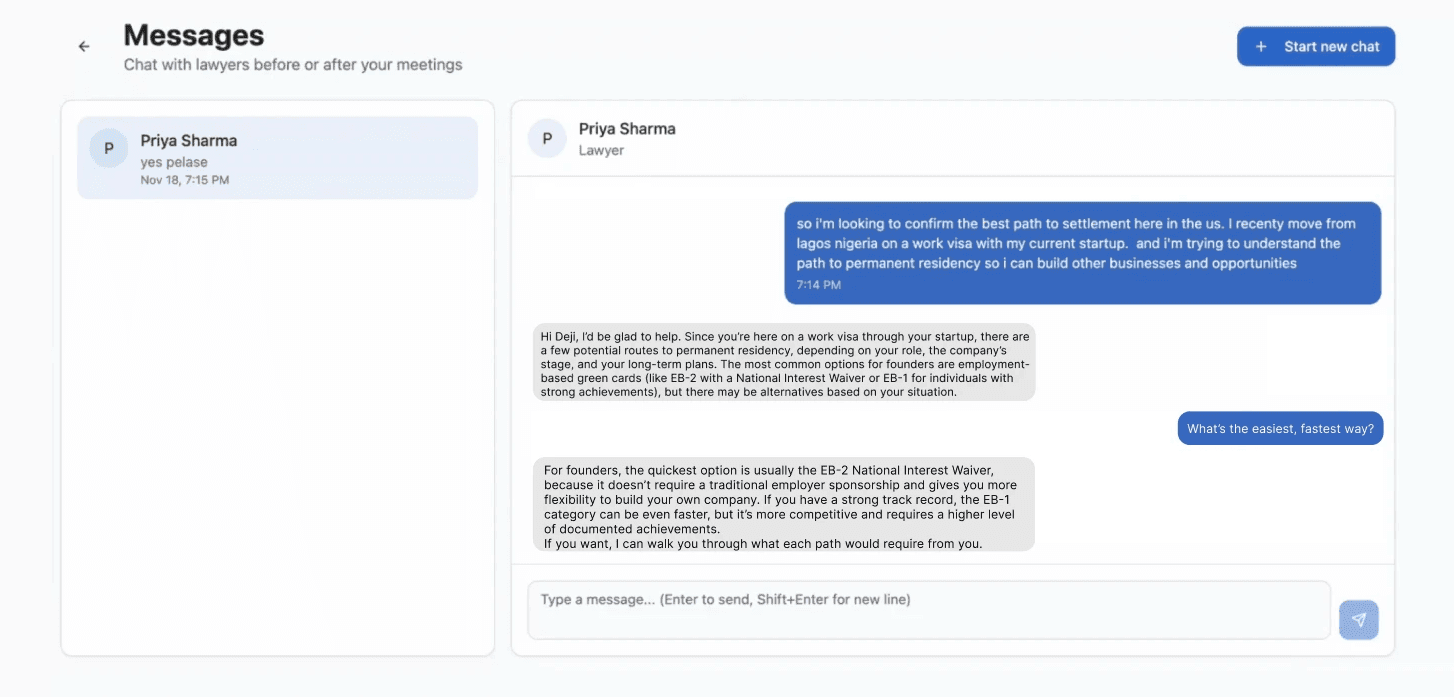
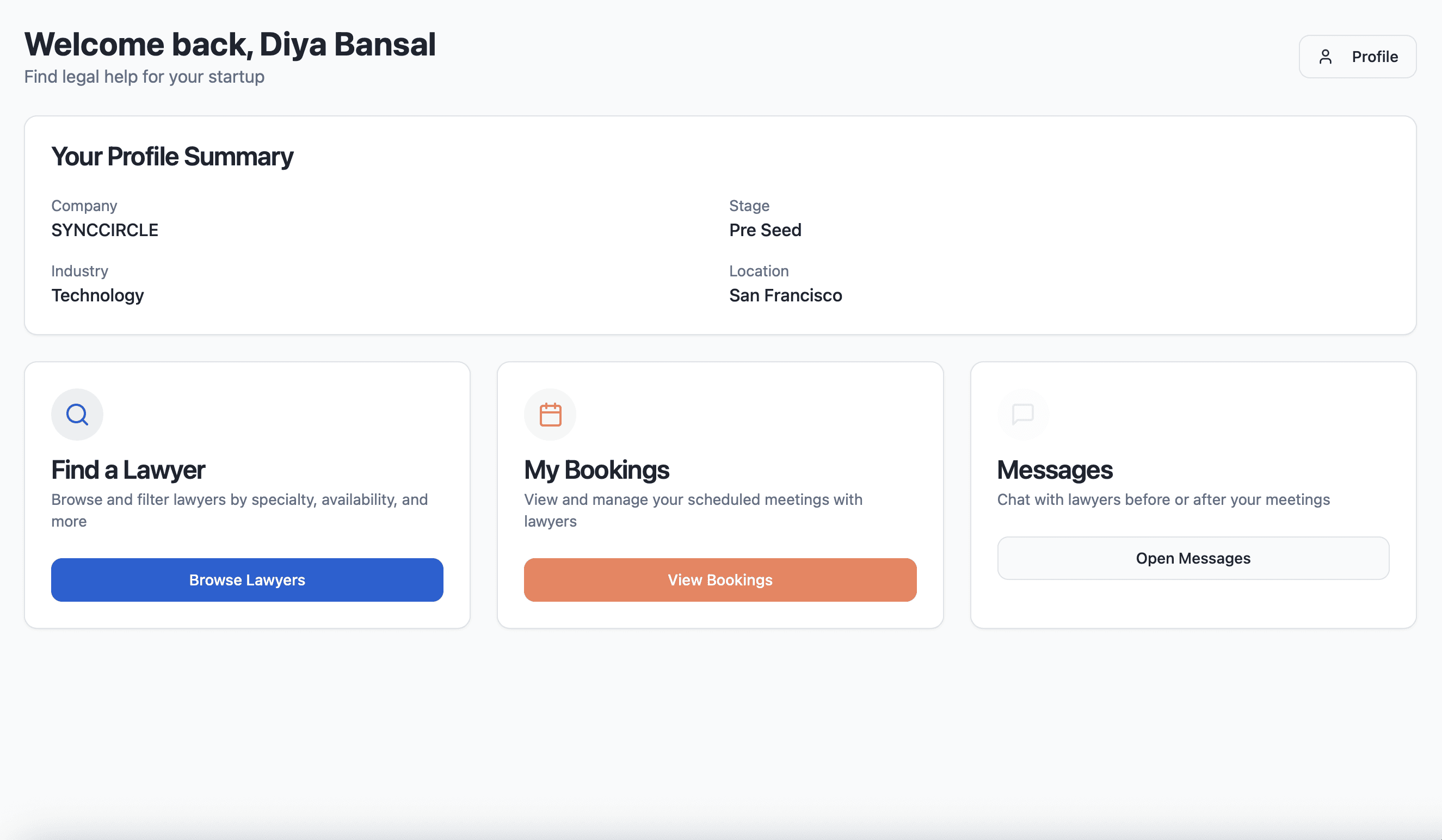
3. Instant Chat Support
A built-in chat feature allows founders to:
Ask quick clarifying questions
Get immediate direction
Reduce anxiety around “not knowing what to ask”
STAKEHOLDER COLLABORATION
Throughout the project, we worked closely with the Nasdaq Entrepreneurial Center to:
Validate feasibility within their ecosystem
Align with founder and business needs
Ensure the solution could realistically be supported or implemente
The final concept was formally presented to the Center, grounding our design decisions in both user and organizational constraints.
IMPACT
Surfaced and addressed a systemic legal access gap affecting low-income immigrant founders across multiple stages of the startup journey
Designed for earned trust
Balanced user experience decisions with the operational realities of the Nasdaq Entrepreneurial Center
Delivered an implementation-ready concept, grounded in real workflows, stakeholder feedback, and scalable partnership models
REFLECTION
1.Designing for complexity: This project challenged me to move beyond interface-level problem solving and engage with a structural, multi-stakeholder system. Legal access is not a single-user problem, it sits at the intersection of founders, lawyers, institutions, and policy constraints. Designing within this complexity required tradeoffs, prioritization, and constant validation.
2.Trust as a design material: One of the biggest learnings was understanding trust as something that must be designed. For immigrant founders navigating unfamiliar systems, trust depended on credibility, relevance, cultural alignment, and clarity. I shifted my approach from focusing on features to focusing on what those features communicate.
3.Design as a spiral, not a straight line: This project reinforced that design is a spiral process, not a linear one. Each phase-research, synthesis, prototyping, testing, and stakeholder feedback-fed back into the next. I challenged, reframed, and refined early assumptions as new insights emerged, especially during prototype testing and founder conversations. Progress came from revisiting decisions with better context.
4.Bridging research and feasibility: Working closely with the Nasdaq Entrepreneurial Center pushed me to ground design decisions in real-world feasibility. Every idea had to be evaluated not only for user value, but also for sustainability, partnerships, and operational fit. This experience strengthened my ability to design solutions that are both human-centered and realistically deployable.
FURTHER I HOPE TO..
Conduct deeper research with lawyers and law students to understand their motivations, constraints, and onboarding needs
Explore operational models for sustaining pro-bono participation
Work with the Nasdaq Entrepreneurial Center to evaluate which components could be piloted or implemented